
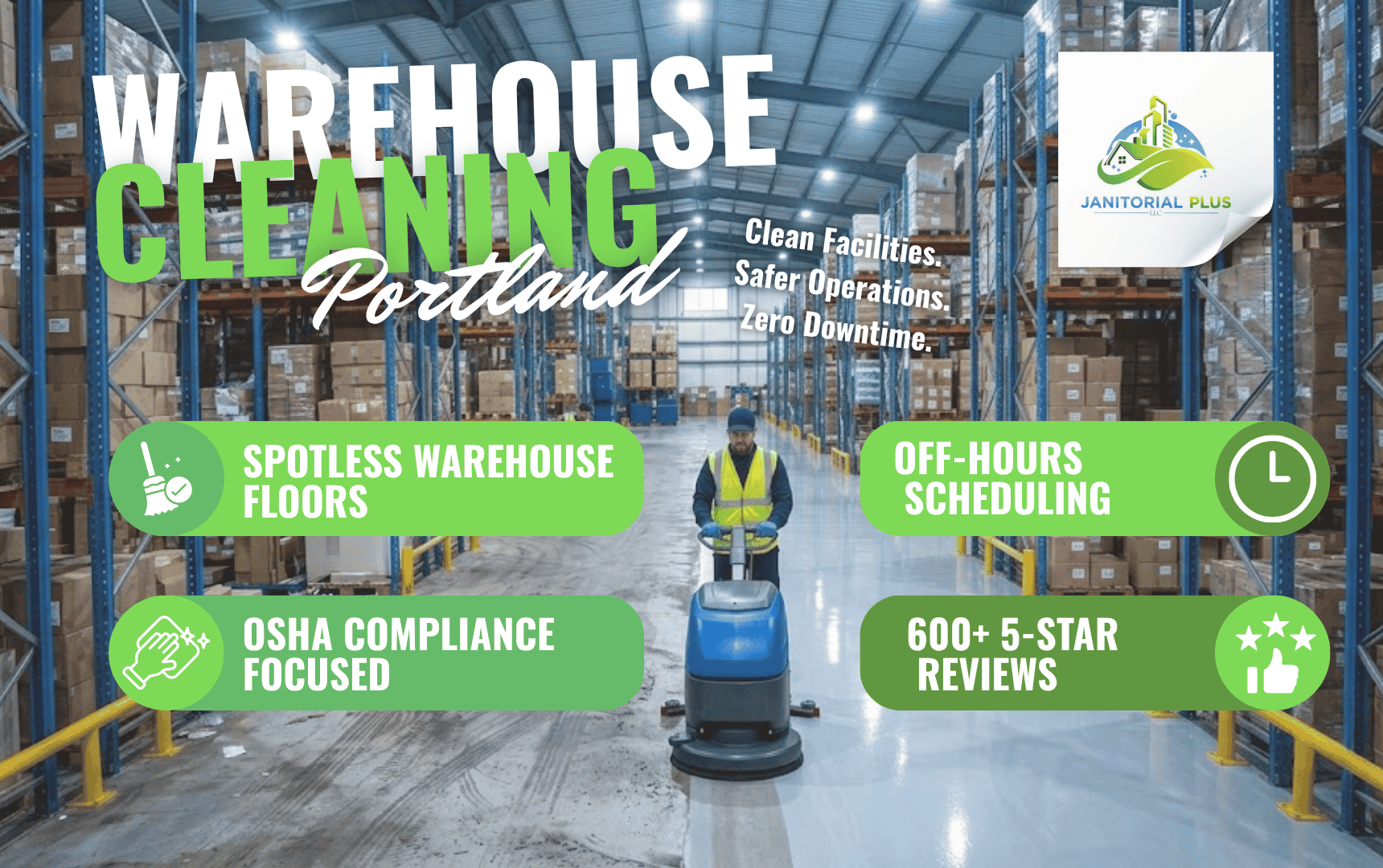
Warehouse & Industrial Cleaning Services in Portland: A Facility Manager’s Guide
Warehouse and industrial cleaning is a different discipline from office cleaning, and treating it the same way is one of the most common mistakes facility managers make when hiring a provider. A crew that does a great job wiping down desks and vacuuming carpet in a corporate office isn’t necessarily equipped to handle a 50,000-square-foot distribution center with forklift traffic, loading docks, and OSHA compliance requirements.
If you’re responsible for a warehouse, manufacturing floor, or industrial facility in the Portland area, this guide covers what warehouse cleaning actually involves, the safety and scheduling factors that matter most, and what to look for in a provider who can handle a facility at this scale.
What Warehouse and Industrial Cleaning Actually Covers
Industrial cleaning goes well beyond sweeping and trash removal. Depending on your facility, it typically includes:
Floor care at scale — sweeping, scrubbing, and degreasing large concrete or epoxy-coated floors, often with ride-on equipment rather than a mop and bucket. Dust and debris control, particularly in facilities with manufacturing processes, packaging lines, or high-traffic loading areas where dust accumulates quickly. Loading dock and dock door cleaning, an area that collects dirt, oil, and debris tracked in from delivery trucks. High-level dusting for racking, overhead lighting, and ductwork, which regular janitorial crews usually aren’t equipped or trained to reach safely. Restroom, break room, and office-area sanitation for the administrative portions of the facility. Pressure washing for exterior areas, dumpster pads, and dock aprons.
A facility manager should expect a cleaning plan that’s scoped specifically to the layout and operations of the building — not a generic janitorial checklist applied to an industrial space.
Why Safety Compliance Matters More Here
Warehouses and industrial facilities carry safety and regulatory considerations that a standard office doesn’t. A cleaning provider working in your facility needs to understand:
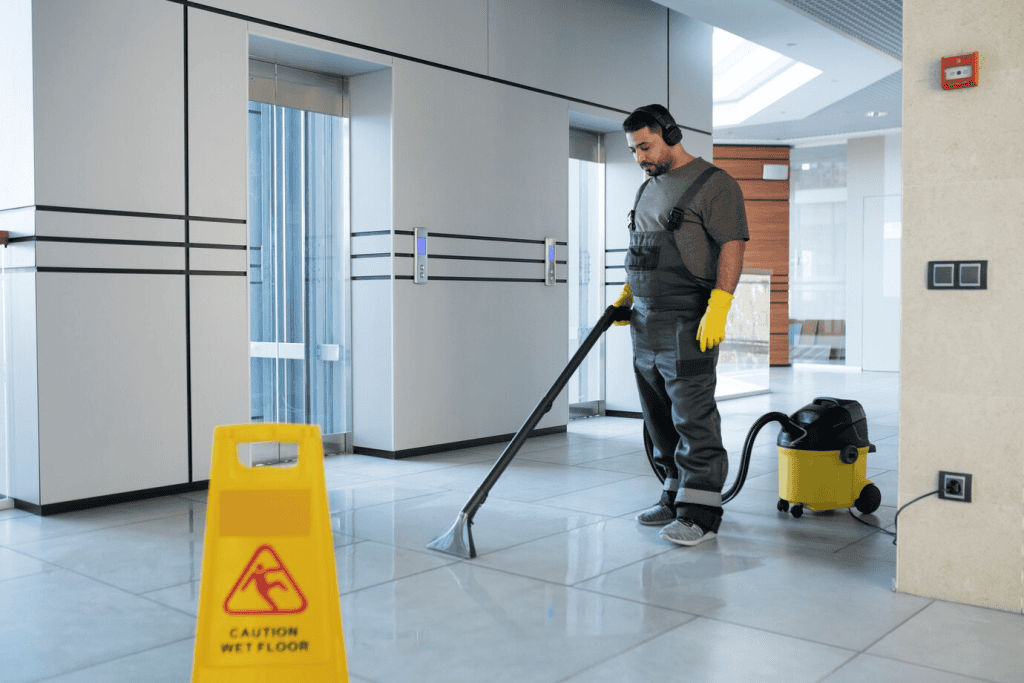
OSHA housekeeping standards, including keeping aisles, exits, and fire equipment clear of debris and buildup. Slip-and-fall risk in areas with oil, water, or product residue — a real liability concern in facilities with heavy foot and equipment traffic. Working safely around forklifts, pallet jacks, and other moving equipment, which requires coordination with your operations team rather than showing up unannounced. Proper handling and disposal of industrial debris, which may fall under different waste regulations than standard office trash.
A provider without experience in industrial environments can inadvertently create a safety issue — for example, cleaning an aisle during active forklift operation, or leaving floors wet in a high-traffic zone without proper signage.
Why Portland Facilities Choose Janitorial Plus
Janitorial Plus has been recognized as one of the Top 50 cleaning companies in the United States, backed by more than 600 five-star reviews from businesses across Portland, Gresham, Beaverton, Hillsboro, Lake Oswego, and Vancouver, WA. Our services include office cleaning, restaurant cleaning, medical office cleaning, post-construction cleanup, window washing, floor care, and more — all from a single provider. Call (877) 697-2977 for a free consultation.
Scheduling Around Your Operations
One of the biggest differences between office and warehouse cleaning is scheduling. Most warehouses and industrial facilities can’t pause operations for a cleaning crew to come through during business hours. A provider experienced with industrial accounts should be able to:
Work off-shift, overnight, or during planned downtime windows so cleaning never interrupts production or shipping schedules. Coordinate with your team on high-traffic times to avoid areas mid-shift. Scale crew size up or down for larger jobs like quarterly deep cleans or a full floor strip-and-refinish without disrupting day-to-day work.
If a provider can’t tell you clearly how they’d schedule around your operating hours, that’s a sign they haven’t managed a facility like yours before.
What to Look For in a Provider
Experience with industrial or warehouse accounts specifically, not just office and retail cleaning. Ask for references from similar facilities. The right equipment. Ride-on floor scrubbers, industrial vacuums, and high-reach equipment are not optional extras for a facility of this size — they’re required to do the job properly and safely. Proper insurance and bonding, given the scale of equipment and inventory typically present in these environments. Flexible, off-hours scheduling that fits your production calendar rather than a fixed daytime slot. Clear safety protocols for working around active equipment and personnel.
Frequently Asked Questions
How is warehouse cleaning different from office cleaning?
Warehouse cleaning covers large-scale floor care, dust and debris control, loading dock areas, and high-level dusting, often using industrial equipment like ride-on scrubbers. It also requires coordination around active operations and equipment, which standard office cleaning doesn’t involve.
Can warehouse cleaning be done without interrupting operations?
Yes, when the provider has experience with industrial accounts. Most warehouse cleaning is scheduled off-shift, overnight, or during planned downtime specifically to avoid disrupting production or shipping.
What safety considerations apply to industrial cleaning?
Providers need to follow OSHA housekeeping standards, keep aisles and exits clear, manage slip-and-fall risk from spills or residue, and coordinate safely around forklifts and other moving equipment.
How often should a warehouse be professionally cleaned?
This depends on the facility’s size, traffic, and type of operation. Many facilities combine a recurring schedule (daily or weekly for high-traffic areas) with periodic deep cleans, such as quarterly floor scrubbing or strip-and-refinish work.
Does warehouse cleaning include exterior areas like loading docks?
Yes, in most cases. Loading docks, dock aprons, and dumpster pads accumulate dirt, oil, and debris from delivery traffic and are typically included in an industrial cleaning scope, often with pressure washing as part of a periodic service.