
How Often Should You Clean Your Business? A Portland Cleaning Frequency Guide
Most business owners in Portland don’t ask “should we clean?” — they ask “how often is actually enough?” Too little cleaning and you’re looking at a buildup of dirt, germs, and complaints from staff or customers. Too much, and you’re paying for a service your space doesn’t need yet. The right frequency depends on your industry, your foot traffic, and what you’re trying to protect — your employees’ health, your customers’ first impression, or both.
Here’s a practical breakdown by facility type, based on what we see across the businesses we clean throughout the Portland metro area.
Office Cleaning Frequency
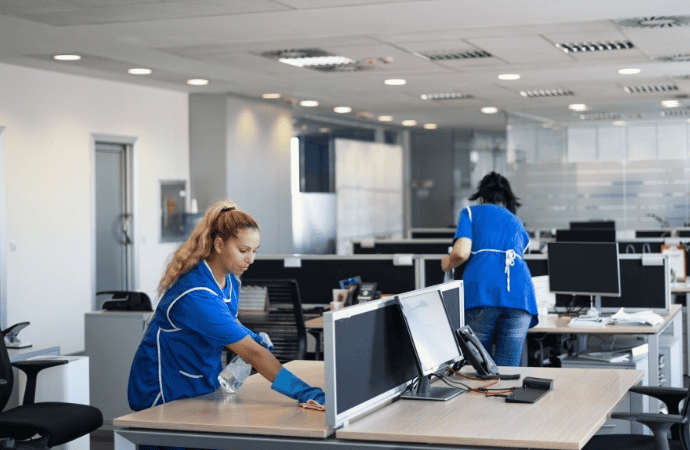
For a standard office, the baseline is nightly cleaning of high-touch areas: trash removal, restrooms, break rooms, and vacuuming or mopping high-traffic paths. A full deep clean — baseboards, interior glass, detailed dusting, disinfecting shared surfaces like door handles and light switches — should happen at least once a month, more often during cold and flu season.
Offices with 20 or more employees, or any shared workspace or co-working environment, generally need daily attention rather than every-other-day service. The more people touching the same surfaces, the faster germs and grime accumulate. If you’re unsure where your office falls, our office cleaning services in Portland page walks through what a typical schedule looks like.
Medical Office and Healthcare Facility Cleaning Frequency
Medical offices operate under a different standard entirely. Patient-facing surfaces — exam tables, waiting room chairs, door handles, reception counters — need to be disinfected daily, and high-touch clinical areas often require cleaning between patient visits, not just once at the end of the day.
Beyond daily disinfection, healthcare facilities should schedule a deep clean weekly, covering floors, restrooms, and any area not covered by daily protocols. This isn’t optional from a compliance standpoint — it’s part of maintaining a safe environment for patients and staff. We cover this in more detail on our medical office and healthcare facility cleaning page.
Why Portland Facilities Choose Janitorial Plus
Janitorial Plus has been recognized as one of the Top 50 cleaning companies in the United States, backed by more than 600 five-star reviews from businesses across Portland, Gresham, Beaverton, Hillsboro, Lake Oswego, and Vancouver, WA. Our services include office cleaning, restaurant cleaning, medical office cleaning, post-construction cleanup, window washing, floor care, and more — all from a single provider. Call (877) 697-2977 for a free consultation.
Warehouse and Industrial Facility Cleaning Frequency
Warehouses and industrial spaces don’t need the same daily detail work as an office, but they can’t be neglected either. Loading docks, break areas, and restrooms should be cleaned daily. Floors — especially in facilities with heavy foot or forklift traffic — benefit from weekly sweeping and scrubbing to prevent dust and debris buildup that can become a safety hazard.
A full facility deep clean, including high shelving, machinery surroundings, and hard-to-reach corners, is typically a monthly or quarterly job depending on the type of operation. More on this on our warehouse and industrial cleaning page.
Restaurant and Commercial Kitchen Cleaning Frequency
Restaurants are the most frequency-sensitive facilities on this list because they’re also the most inspected. Kitchen surfaces, prep areas, and equipment need cleaning throughout every single shift, not just at closing. Deep cleaning of hoods, grease traps, walk-in coolers, and floor drains should happen weekly at minimum — Multnomah County health inspectors can show up without notice, and what they find determines whether you pass, need a follow-up, or shut down temporarily. Our restaurant cleaning checklist for Portland breaks this down task by task.
Carpet and Floor Cleaning Frequency
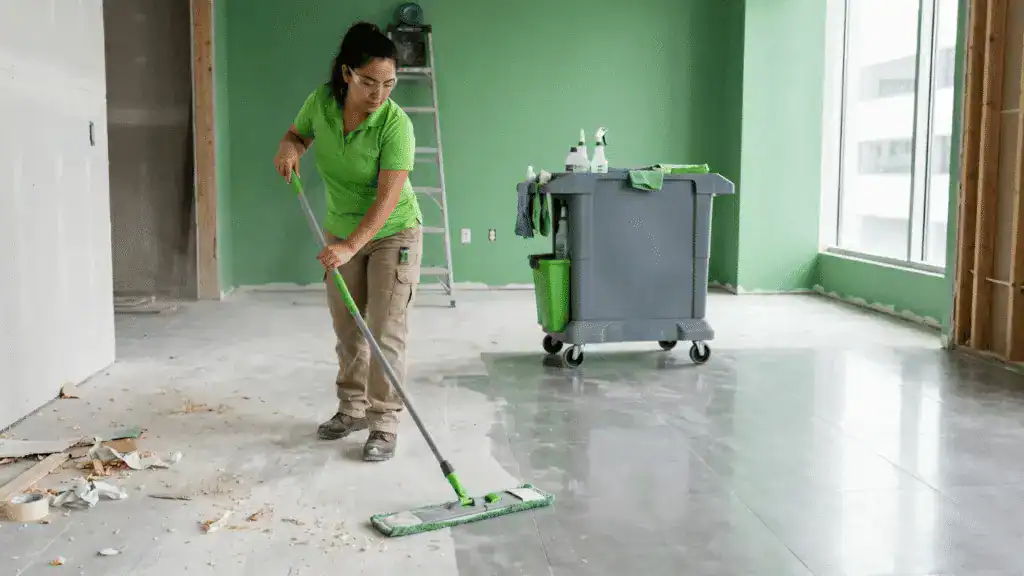
Carpets in a standard office should be professionally cleaned every 6 to 12 months, but high-traffic entryways, lobbies, and conference rooms often need it closer to every 3 to 4 months. Waiting until carpets look visibly dirty means you’ve already lost months of embedded dirt and allergens working their way into the fibers. Hard floors depend on the material and traffic, but a professional deep clean every 1 to 3 months keeps them from developing permanent wear patterns.
Signs Your Current Cleaning Schedule Isn’t Enough
A few warning signs tend to show up before anyone files a formal complaint:
- Employees or customers commenting on odors, especially in restrooms or break rooms
- Visible dust accumulating on surfaces between cleanings
- An uptick in sick days during flu season
- Trash cans that are full before the next scheduled service
- Carpets or floors that look dull no matter how recently they were cleaned
Any one of these usually means it’s time to adjust frequency, not switch providers.
Frequently Asked Questions
How often should a small office be cleaned?
A small office typically needs nightly cleaning of trash, restrooms, and high-traffic floors, with a full deep clean once a month. Offices with higher foot traffic or shared workspaces may need daily deep-cleaning tasks instead.
How often should a medical office be disinfected?
Patient-facing and high-touch surfaces in a medical office should be disinfected daily, with a full deep clean scheduled weekly to meet health and safety standards.
How often should warehouse floors be cleaned?
Warehouse floors with regular foot or equipment traffic should be swept and scrubbed weekly, with a full facility deep clean monthly or quarterly depending on operations.
How often should restaurant kitchens be cleaned?
Commercial kitchens need cleaning throughout every shift, with a full deep clean of hoods, grease traps, and floor drains at least once a week to stay ready for health inspections.
How often should office carpets be professionally cleaned?
Standard office carpets should be professionally cleaned every 6 to 12 months, while high-traffic areas like lobbies and entryways need it every 3 to 4 months.